The Difference Between Shipping Fast and Shipping Well (And When Each Matters)
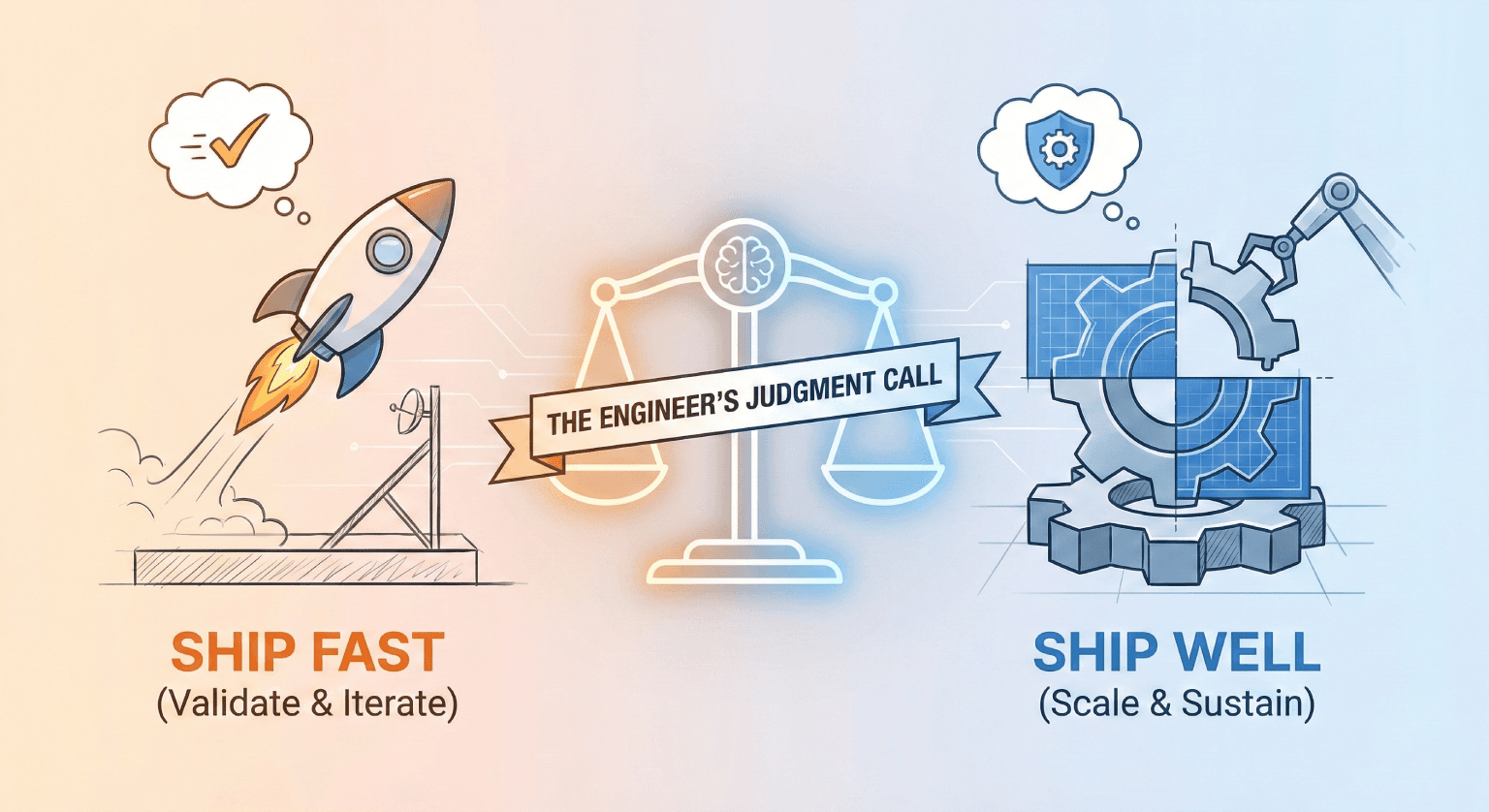
I've worked on teams that shipped fast and broke things. I've worked on teams that built beautifully engineered systems that never launched. Neither extreme works. The skill is knowing which mode you're in and adjusting accordingly.
Shipping Fast
Shipping fast means reducing the time between "we decided to build this" and "users are using it." It means cutting scope ruthlessly, accepting imperfection, and focusing on the critical path.
When to ship fast:
- You're validating a hypothesis. You don't know if users want this. Building the perfect version of something nobody wants is the most expensive mistake in software.
- The market window is closing. A competitor is launching next month. A seasonal opportunity is approaching. Speed has strategic value.
- The cost of being wrong is low. If you can roll back easily, the risk of a fast ship is contained.
What shipping fast looks like:
// Ship fast: hardcoded values, minimal abstraction
fun getAdFrequency(userId: String): Int {
    return 5 // One ad every 5 items. Good enough for now.
}

// Ship fast: skip the generic solution
fun formatPrice(cents: Int): String {
    return "$${cents / 100}.${(cents % 100).toString().padStart(2, '0')}"
    // Only handles USD. That's fine for launch.
}
The code is simple, maybe too simple. But it works, it's easy to understand, and it can be replaced later when you know more about what's actually needed.
Shipping Well
Shipping well means building something that will still work correctly six months from now, when the original author has moved to another project, the requirements have shifted, and the traffic has doubled.
When to ship well:
- The system is foundational. Authentication, data pipelines, billing logic. Getting these wrong has compounding costs.
- The blast radius is large. Code that runs on every session for every user deserves extra care.
- You've already validated the concept. You know users want this. Now build it properly.
What shipping well looks like:
// Ship well: configurable, tested, observable
class AdFrequencyConfig(
    private val remoteConfig: RemoteConfig,
    private val experimentService: ExperimentService
) {
    fun getFrequency(userId: String): Int {
        val experimentOverride = experimentService.getOverride(
            experiment = "ad_frequency",
            userId = userId
        )
        if (experimentOverride != null) return experimentOverride

        return remoteConfig.getInt("ad_frequency_default", fallback = 5)
    }
}
More code. More abstractions. But also: remotely configurable, experiment-ready, and with a sensible fallback. This is the version you want running in production long-term.
The Judgment Call
The hard part isn't knowing the difference. It's knowing which mode to be in right now.
Questions I ask:
- How long will this code live? A prototype that will be rewritten in a month can be scrappy. Infrastructure that will run for years needs to be solid.
- How many people will touch this code? Solo code can be fast and messy. Code that a team maintains needs to be clear.
- What's the cost of a bug? A visual glitch is cheap to fix. A data corruption bug is not.
- Can I add quality later? Sometimes yes (add tests after launch). Sometimes no (fixing a bad data model after users have data is very hard).
The False Dichotomy
The real insight is that shipping fast and shipping well aren't opposites. The best engineers I've worked with ship fast because they ship well. Their code is simple, which makes it fast to write. Their mental models are clear, which means less debugging. Their systems are modular, which means changes are contained.
Speed comes from clarity, not from cutting corners.
The engineers who are consistently slow aren't the ones who care too much about quality. They're the ones who build complexity they don't need, second-guess decisions they've already made, or don't understand the problem well enough to take the direct path.
Invest in understanding the problem deeply. The code will follow quickly.
Related posts
What I Wish I Knew Before My First Big Production Incident
Production incidents are inevitable. How you handle them defines your growth as an engineer. Here's what I learned from my first major one.
How I Went From Writing Features to Owning Systems
The transition from feature engineer to system owner is the biggest career leap most engineers make. What changed for me and what I wish I'd known.
How I Think About Technical Debt in High-Velocity Teams
Tech debt isn't inherently bad. It's a tool. The problem is when teams accumulate it unconsciously, without tracking it or paying it down strategically.