What I Wish I Knew Before My First Big Production Incident
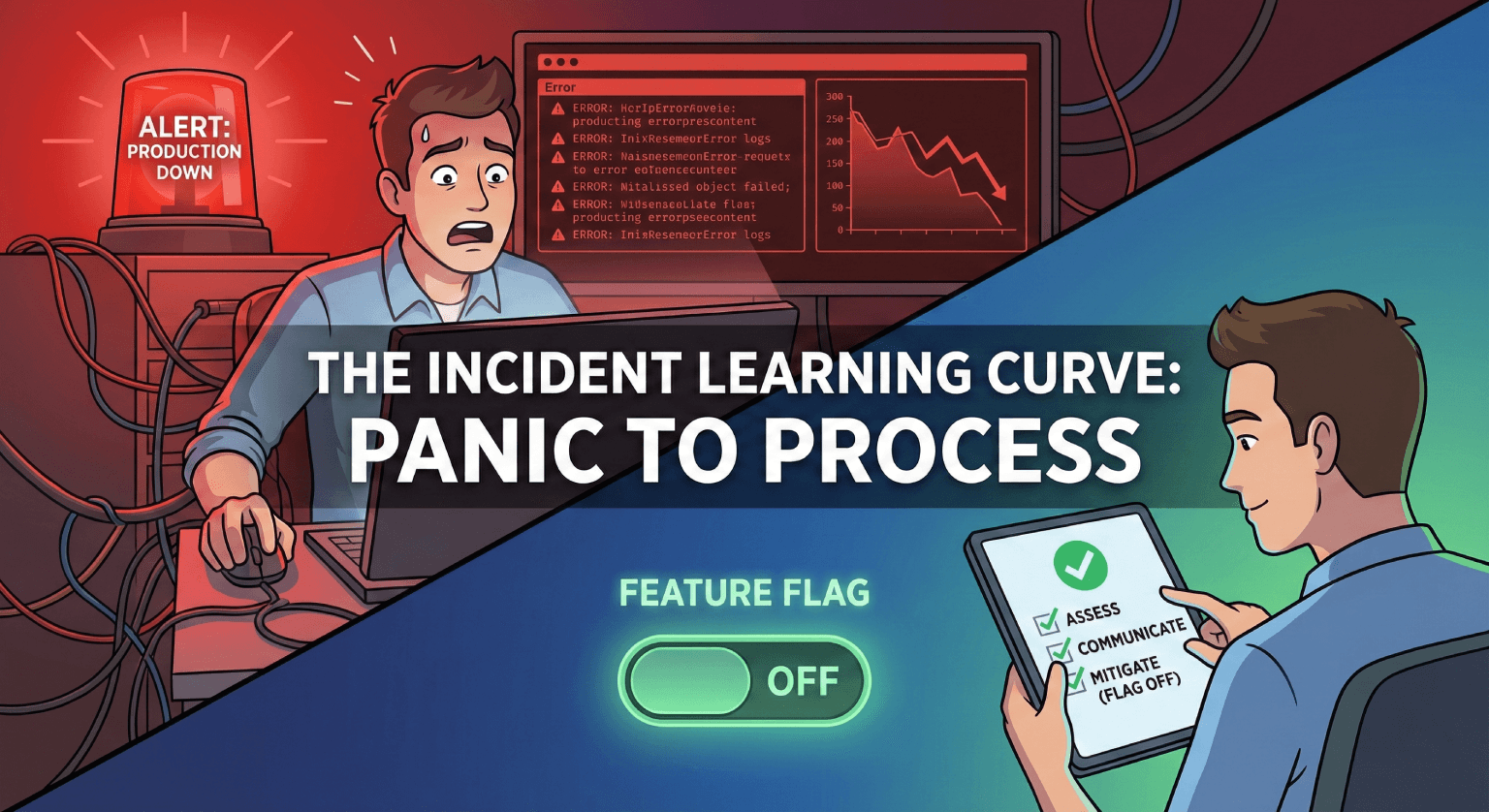
My first major production incident happened on a Tuesday afternoon. A change I'd shipped the previous day was causing intermittent crashes for about 3% of users. The crash rate had been climbing slowly overnight and crossed the alert threshold while I was eating lunch.
I remember the feeling: a cold wave of panic, followed by the immediate urge to fix it as fast as possible. That urgency led me to make every mistake in the book.
What Went Wrong (My Response, Not Just the Bug)
Mistake 1: I Rushed the Fix
My first instinct was to write a fix and push it immediately. I skipped the usual review process because "it's urgent." The fix addressed the symptom (a null pointer in the ad rendering path) but not the root cause (a race condition between two async operations).
The crash rate dropped. Then it came back two hours later, in a different form. My hasty fix had papered over the problem.
Mistake 2: I Didn't Communicate
I was heads-down for an hour before my manager found out through the alerting dashboard. By then, other teams were already asking questions I could have answered proactively.
Mistake 3: I Took It Personally
I spent the next week feeling terrible. I questioned whether I was good enough for the role. I over-scrutinized every subsequent PR to the point where I was shipping half as fast.
What I Should Have Done
Step 1: Assess, Don't Act
Before writing any code, understand the scope. How many users are affected? Is it getting worse or stable? Is there a quick mitigation that doesn't require a code change (feature flag, server-side config, rollback)?
In my case, the change was behind a feature flag. I could have disabled it in 30 seconds. Instead, I spent an hour writing a code fix.
Step 2: Communicate Early
The moment you know there's an issue, tell your team. A brief message is enough:
"I'm investigating elevated crash rates in the ad rendering path. Likely related to yesterday's change. Working on mitigation now. Will update in 30 minutes."
This does three things: it sets expectations, it prevents duplicate investigation, and it gives others a chance to help.
Step 3: Mitigate First, Fix Later
Mitigation and fixing are different things. Mitigation stops the bleeding. Fixing addresses the root cause.
Mitigation options, in order of speed:
- Disable the feature flag (seconds)
- Roll back the change (minutes)
- Ship a targeted fix (hours)
Always start with the fastest option. You can ship a proper fix after the incident is contained.
Step 4: Write the Postmortem
Not to assign blame. To learn. The best postmortems I've read focus on:
- What happened (timeline)
- Why it happened (root cause)
- Why we didn't catch it sooner (detection gap)
- What we'll change to prevent recurrence (action items)
Lessons I Carry Forward
Every engineer causes incidents. The goal isn't zero incidents. It's short time-to-detection, fast mitigation, and effective prevention of recurrence.
Feature flags are your best friend. Any change that touches a critical path should be behind a flag that can be disabled without a code deploy.
Your test environment lies. Production has traffic patterns, device diversity, and timing conditions that no test environment can replicate. Staged rollouts catch what tests miss.
Panic is the enemy. The urge to fix things immediately leads to hasty decisions. Take a breath. Assess. Communicate. Then act.
Incidents are the best teachers. I learned more about the ad rendering system from that one incident than from months of feature work. The debugging skills, the system knowledge, the operational awareness, all of it came from the pressure of something being broken in production.
The team remembers how you handled it, not that it happened. Nobody judges an engineer for causing a production incident. They judge how you responded. Did you communicate? Did you stay calm? Did you follow up with a thorough postmortem? That's what builds trust.
My first incident was painful. It was also the week I grew the most as an engineer.
Related posts
How I Went From Writing Features to Owning Systems
The transition from feature engineer to system owner is the biggest career leap most engineers make. What changed for me and what I wish I'd known.
How I Think About Technical Debt in High-Velocity Teams
Tech debt isn't inherently bad. It's a tool. The problem is when teams accumulate it unconsciously, without tracking it or paying it down strategically.
The Difference Between Shipping Fast and Shipping Well (And When Each Matters)
Speed and quality aren't always at odds. But when they are, knowing which one to optimize for is one of the most important judgment calls an engineer can make.